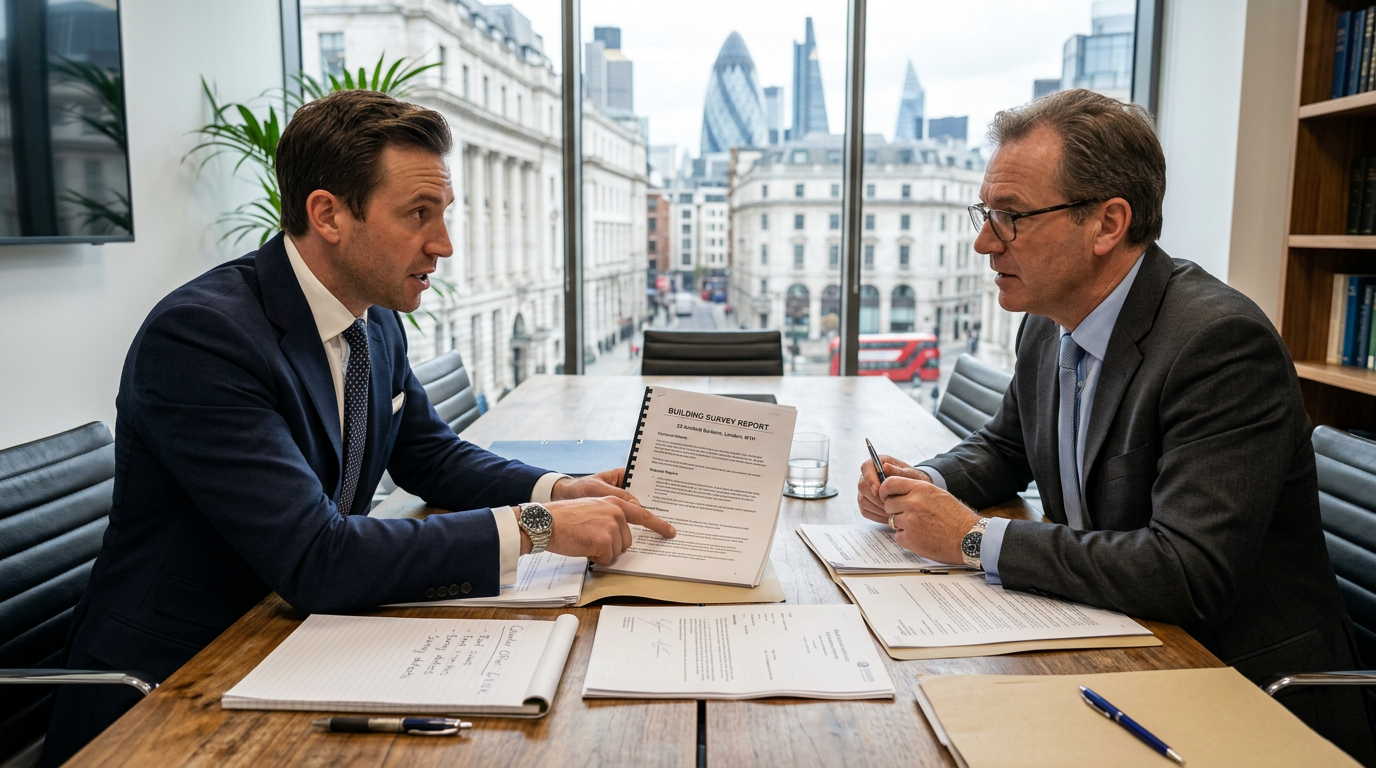
You've received your building survey report and it makes for sobering reading. Damp, roof issues, structural movement, failing pointing — the list of defects is longer than you'd hoped. What do you do now? York Surveyors walks you through exactly how to use your survey findings to negotiate effectively, protect your position, and potentially save thousands of pounds on your York property purchase.
The good news? A survey that flags problems is not the end of the deal — it's the beginning of a negotiation. Our clients regularly use Level 2 and Level 3 survey reports to achieve price reductions of £5,000–£25,000 on York properties. The key is knowing how to approach it.
Step 1: Read Your Report Carefully and Understand the Findings
Before you pick up the phone to your estate agent, take the time to fully understand what your report is telling you. RICS building survey reports use a traffic-light condition rating system:
- Condition Rating 1 (Green): No repair is currently needed. Normal maintenance should be carried out.
- Condition Rating 2 (Amber): Defects that need repairing or replacing, but are not considered serious or urgent.
- Condition Rating 3 (Red): Defects that are serious and/or need to be repaired, replaced or investigated urgently.
Focus your negotiation on Condition Rating 3 items first, then significant Condition Rating 2 issues. Minor aesthetic matters are unlikely to justify a price reduction.
Use Your Free 30-Minute Consultation
All York Surveyors Level 2 and Level 3 reports include a complimentary 30-minute phone consultation with your surveyor. Use this call to clarify the severity of each issue, understand the repair cost estimates, and get guidance on how to prioritise your negotiation points.
Step 2: Obtain or Use Repair Cost Estimates
Your Level 3 building survey report will include estimated repair costs for the major defects identified. These are professional estimates, not contractor quotes, but they provide a solid basis for negotiation. For significant works, you may want to obtain one or two contractor quotes to support your case. This is particularly useful when:
- The repair cost estimate in the report is particularly high (e.g. full roof replacement, underpinning)
- The vendor disputes the estimate
- You want to present a specific, evidenced figure rather than a range
Getting contractor quotes takes time — typically one to two weeks — so be mindful of your position in the chain and any deadlines. Your solicitor can advise on whether it's appropriate to slow down the transaction while you gather quotes.
Step 3: Decide Your Negotiation Approach
There are two main approaches to negotiating after a survey, and the right choice depends on the scale of the issues found and your personal situation.
Option A: Request a Price Reduction
The most common approach. You inform the vendor (through your estate agent) that your survey has revealed defects that were not apparent on viewing, and request a reduction in the asking price commensurate with the cost of remediation. Keep your request professional and evidence-based — attach the relevant sections of your survey report and any contractor quotes you have obtained.
A reasonable reduction request focuses on the cost of essential repairs only — not cosmetic upgrades or improvements you would make anyway. Vendors are more likely to accept a reduction based on structural or damp issues than on "I'd like to redecorate."
Option B: Request That the Vendor Carries Out Repairs
An alternative is to ask the vendor to remedy specified defects before exchange of contracts. This is sometimes preferable where the vendor has access to tradespeople at lower cost, or where the works are straightforward. However, be cautious: ensure any agreed works are done to an acceptable standard, specify this in writing through your solicitor, and retain the right to have works inspected before you proceed.
Step 4: Communicate Through the Right Channels
Always communicate your post-survey negotiation in writing, through your estate agent. This creates a clear record and removes ambiguity. Your message should:
- Reference the specific findings from your building survey report
- State the specific reduction or remediation you are requesting
- Be factual, professional and free of emotional language
- Include a copy of the relevant report extracts or contractor quotes
- Set a reasonable timeframe for a response (typically five to seven working days)
"After receiving our Level 3 report, Rachel gave us a brilliant 30-minute consultation explaining exactly which issues were serious and which we could live with. We then wrote to the agent requesting £12,000 off based on the roof and damp findings. The vendor accepted £9,500. The whole process took four days."
— Tom & Alicia Brennan, Holgate, York
Step 5: What If the Vendor Refuses to Negotiate?
Vendors sometimes refuse to negotiate, particularly if they are confident in their asking price or are under no pressure to sell. If this happens, you have three options:
- Proceed at the original price, accepting that you'll need to budget for the repairs yourself. This is a valid choice if you love the property and the repair costs are manageable.
- Continue negotiating. Ask your estate agent to go back to the vendor with a slightly revised position. Sometimes a second attempt at a more modest reduction succeeds where a first attempt failed.
- Walk away. If the defects are serious and the vendor won't budge, it may be the right decision to withdraw your offer. You will lose your survey cost and any legal fees incurred, but this is far less than the cost of buying a property with undisclosed or underpriced problems.
Common Mistakes to Avoid When Negotiating After a Survey
- Asking for too much: A reduction request that covers every minor item in the report will be taken less seriously than one focused on major defects.
- Emotional language: Stick to facts and figures. "The roof is in a dangerous state" is less credible than "The roof requires urgent replacement at an estimated cost of £9,500 as confirmed by a RICS-qualified surveyor."
- Going direct to the vendor: Always communicate through your estate agent. Going direct can create awkwardness and bypass the professional process.
- Moving too slowly: If you have repair quotes or a negotiation position ready, act promptly. Delay can result in other buyers entering the picture.
- Forgetting your legal position: You have no obligation to proceed until exchange of contracts. Until then, you can withdraw without penalty (other than your own survey and legal costs).
Frequently Asked Questions
There's no set rule, but a reasonable reduction request is typically the estimated cost of essential repairs identified in the survey. Our York clients regularly achieve reductions of £5,000–£20,000 on properties with significant defects. Always focus on serious structural, damp or safety issues rather than cosmetic matters.
Yes. Until exchange of contracts, both buyer and vendor can withdraw from a transaction without legal penalty in England and Wales. This is known as "gazumping" (vendor withdrawing to accept a higher offer) or simply a vendor deciding not to proceed. However, most vendors are motivated to sell and will engage constructively with a well-evidenced negotiation request.
Not necessarily. A "bad" survey just means defects have been found — it doesn't automatically mean the property isn't worth buying. The key questions are: how serious are the defects, how much will they cost to fix, and can you agree an appropriate reduction with the vendor? Speak to your surveyor on the free consultation call before making any decision.
Let York Surveyors Help You Negotiate
Every York Surveyors Level 2 and Level 3 survey includes a free 30-minute post-survey phone consultation. We'll walk you through the report findings, explain which issues are most serious, confirm the repair cost estimates, and give you practical guidance on how to approach negotiations with the vendor.
Ready to book your survey? Request a quote online.

Rachel has helped hundreds of York buyers navigate post-survey negotiations since joining York Surveyors in 2014. She specialises in HomeBuyer Reports and Level 3 surveys across York city centre and surrounding villages.