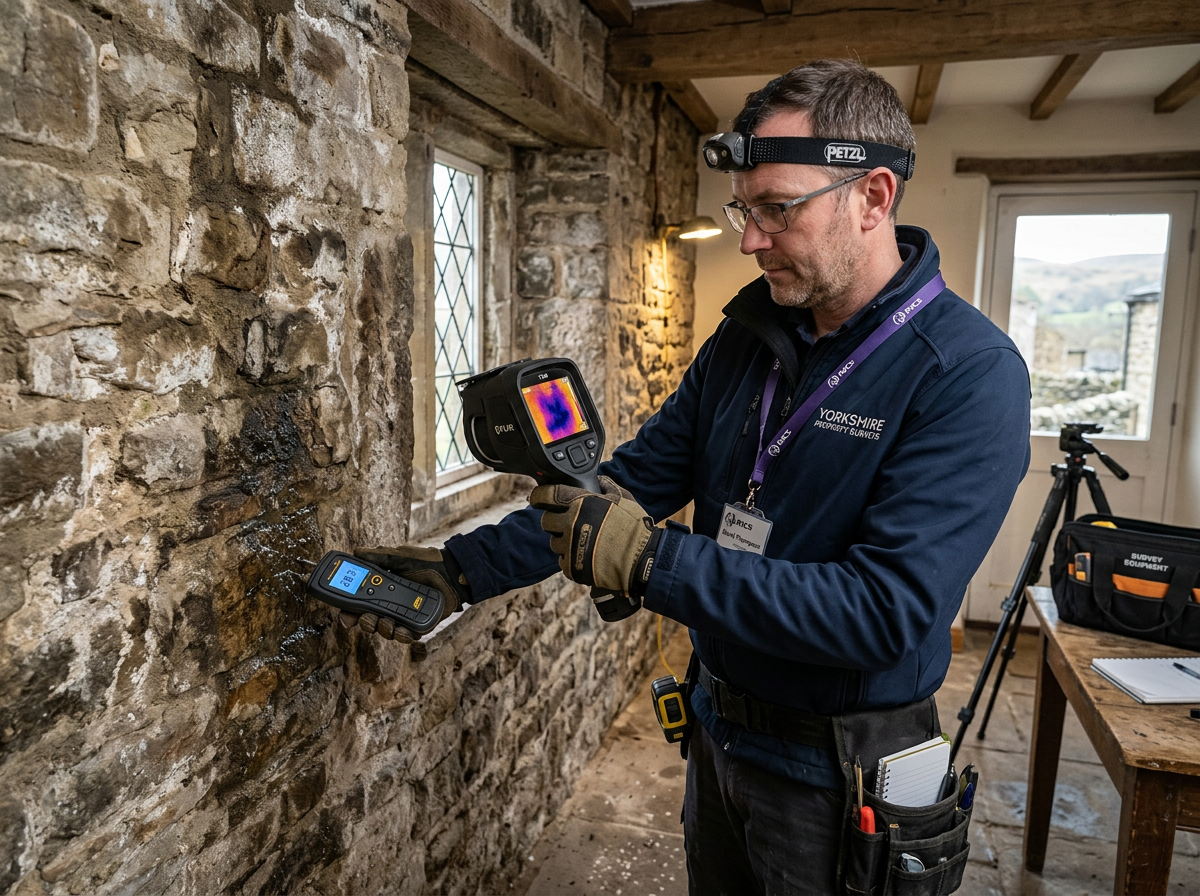
If you're buying a property in York — particularly anything built before the 1950s — damp is one of the issues you're most likely to encounter. Across the hundreds of building surveys we've carried out as York Surveyors, signs of damp appear in more than half of all pre-war properties we inspect. The good news? Not all damp is the same, and not all of it is catastrophic. But you absolutely need to know what you're looking at before you exchange contracts.
This guide covers everything you need to know about damp as a York homebuyer: what the different types are, how to spot the warning signs, and what to do if your survey report flags it up.
The Three Types of Damp in York Properties
When people talk about damp in a house, they often lump everything together. But there are three distinct types, each with different causes, different visual signs, and very different repair costs. Understanding the difference could save you thousands of pounds.
1. Rising Damp
Rising damp is caused by groundwater moving upwards through the fabric of a wall by capillary action. It's most common in older properties that either have no damp-proof course (DPC), or where the DPC has broken down or been bridged. York has a large number of Victorian and Edwardian terraces where the original slate DPC is now over 100 years old.
Signs of rising damp to look for:
- A tide mark on the wall — usually a horizontal line of discolouration at around 1 metre height
- Salts crystallising on the wall surface (white powdery deposits called efflorescence)
- Damaged plaster, especially where it appears blown or friable near the base of walls
- Staining on skirting boards and wallpaper near floor level
- A musty smell that's most noticeable at ground floor level
⚠️ Surveyor's Note
True rising damp is far less common than damp-proofing companies would have you believe. We frequently see properties where a specialist has recommended expensive injection DPC works that weren't actually necessary. Always get an independent RICS survey before commissioning any remedial work.
2. Penetrating Damp
Penetrating damp occurs when water enters from outside through a defect in the building fabric — failed pointing, cracked render, a leaking roof, defective gutters or a faulty window seal. Unlike rising damp, it appears at various heights and is associated with a specific external defect. This is the most common type of damp we find in York's stone-built properties.
Signs of penetrating damp:
- Damp patches or staining that appear on walls or ceilings after heavy rain
- Staining around windows, chimneys, or roof junctions
- Wet patches that vary in size depending on weather conditions
- Mould growth on internal surfaces, particularly in corners near external walls
3. Condensation
Condensation is by far the most common form of damp in all properties, including modern ones. It occurs when warm, moist air meets a cold surface and the moisture condenses out. It's most visible as black mould on walls — particularly in corners — around window frames and in poorly ventilated spaces. Condensation is largely a lifestyle and ventilation issue and in most cases doesn't indicate a structural problem.
"We're asked about damp more than almost any other issue. The key thing I tell clients is: don't panic. Damp is manageable, but you need to know what type you're dealing with before you spend any money."
What Happens When a Surveyor Finds Damp?
During a Level 2 Home Survey or Level 3 Building Survey, your surveyor will use a calibrated electronic moisture meter to measure moisture levels in walls, floors and ceilings throughout the property. Readings above a certain threshold will be flagged in the report, along with the surveyor's assessment of the likely cause.
How Much Does Damp Cost to Fix?
Repair costs vary enormously depending on the cause and extent of the damp. As a rough guide:
| Damp Type | Typical Repair Cost |
|---|---|
| Condensation (improved ventilation) | £200 – £600 |
| Penetrating damp (pointing / render) | £500 – £3,000 |
| Penetrating damp (roof or gutters) | £300 – £5,000+ |
| Rising damp (injection DPC + re-plaster) | £2,000 – £10,000 |
Using a Damp Report to Renegotiate the Price
If your survey identifies significant damp, you have several options. You can ask the vendor to carry out repairs before completion, request a price reduction to cover remediation costs, or — if damp is severe enough — withdraw from the purchase. Many of our clients successfully renegotiate using our reports. The key is having a clear, independent assessment of what the problem is and what it costs to fix.
Should You Still Buy a Property with Damp?
In most cases, yes. Damp is a common feature of older properties and is rarely a reason to walk away — as long as the cause is understood and the repair cost is factored into the price. The worst thing you can do is buy a property without a survey and discover the damp afterwards, when it's entirely your problem.
Frequently Asked Questions
Look for a horizontal tide mark on internal walls at around 1 metre height, white salt deposits (efflorescence) on brick or plaster, and damaged skirting boards near floor level. A surveyor's moisture meter will confirm whether elevated readings are present. However, only a qualified surveyor can properly diagnose the cause of those readings.
Not necessarily. Black mould is most commonly caused by condensation — a ventilation and lifestyle issue rather than a structural defect. It typically appears in corners of rooms, around window frames, and in bathrooms. If mould is widespread or associated with damp patches on external walls, it may indicate penetrating damp, which does require investigation.
An independent RICS building survey is almost always preferable to a specialist damp report commissioned by a damp-proofing company — because there is an obvious conflict of interest in asking someone who sells damp treatments to diagnose your damp. A Level 2 or Level 3 survey from York Surveyors will include a thorough assessment of all damp issues and honest advice on what's needed.
Get a Survey Before You Buy
The message from York Surveyors is always the same: get a property survey, understand what you're buying, and make an informed decision. Damp is manageable when you know what you're dealing with.
Request a free quote today.

James has over 15 years' experience surveying properties across York and North Yorkshire. He founded York Surveyors to provide genuinely independent, expert advice to local property buyers and sellers.