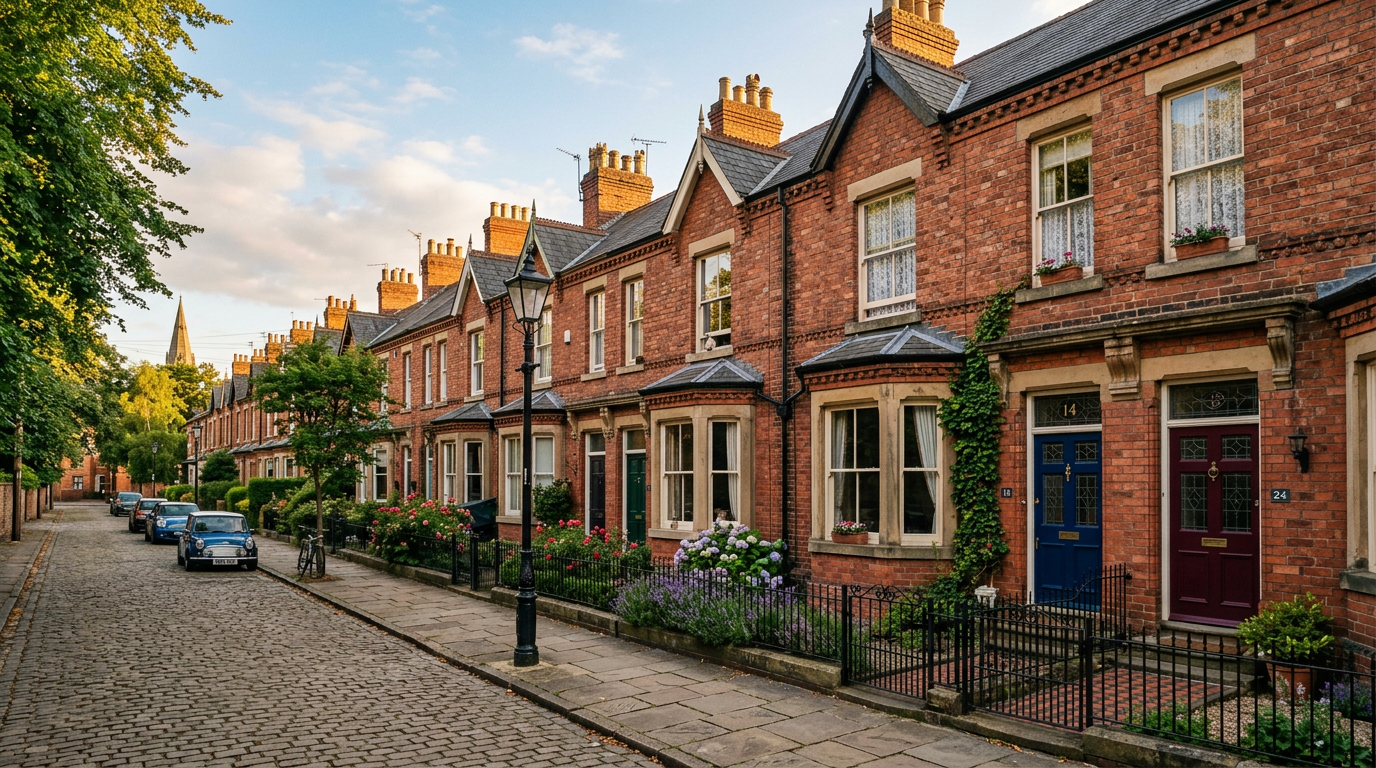
York Surveyors inspects more Victorian terraced houses than any other property type in York. These beautiful, characterful homes — built mostly between 1837 and 1901 — make up a huge proportion of the city's housing stock, particularly in areas like Fishergate, Bishopthorpe Road, Holgate and Acomb. If you're thinking of buying a Victorian house in York, this guide will arm you with everything you need to know.
Victorian houses are genuinely wonderful to live in. High ceilings, original fireplaces, bay windows, solid brick construction — they have a character that modern homes simply cannot replicate. But they also come with very predictable issues, and a buyer who doesn't commission the right survey before exchanging contracts can face repair bills running into tens of thousands of pounds.
Why Are Victorian Houses So Popular in York?
York's Victorian terraces were built during a period of rapid industrial and commercial expansion. The arrival of the railway industry — particularly the York Carriage Works and various engineering yards — drew workers from across Yorkshire, and the terraced house was the housing solution of choice. Today, these properties offer exceptional value for money: typically larger than equivalent modern builds, with well-proportioned rooms, mature gardens and excellent transport links into the city centre.
Areas such as Bishopthorpe Road (affectionately known as "Bishy Road"), South Bank, Bootham and Tang Hall all feature dense concentrations of Victorian terraced housing. Prices vary enormously — a two-bedroom mid-terrace off Nunnery Lane might sell for £200,000, while a four-bedroom end-terrace with retained period features near the city walls can fetch £450,000 or more.
The Most Common Defects We Find in York Victorian Houses
Over 15 years and more than 1,200 surveys, the York Surveyors team has identified a consistent set of issues that appear time and again in Victorian properties. Knowing what to look for can help you ask the right questions before you even instruct a surveyor.
1. Damp and Rising Damp
Victorian houses were built without damp-proof courses (DPCs). Modern DPCs — whether chemical injections, physical slates or drainage channels — are a later addition, and many properties either have inadequate DPCs or none at all. Rising damp is particularly common in ground-floor rooms and manifests as a tide mark on lower walls, peeling plaster, salt deposits and a musty smell.
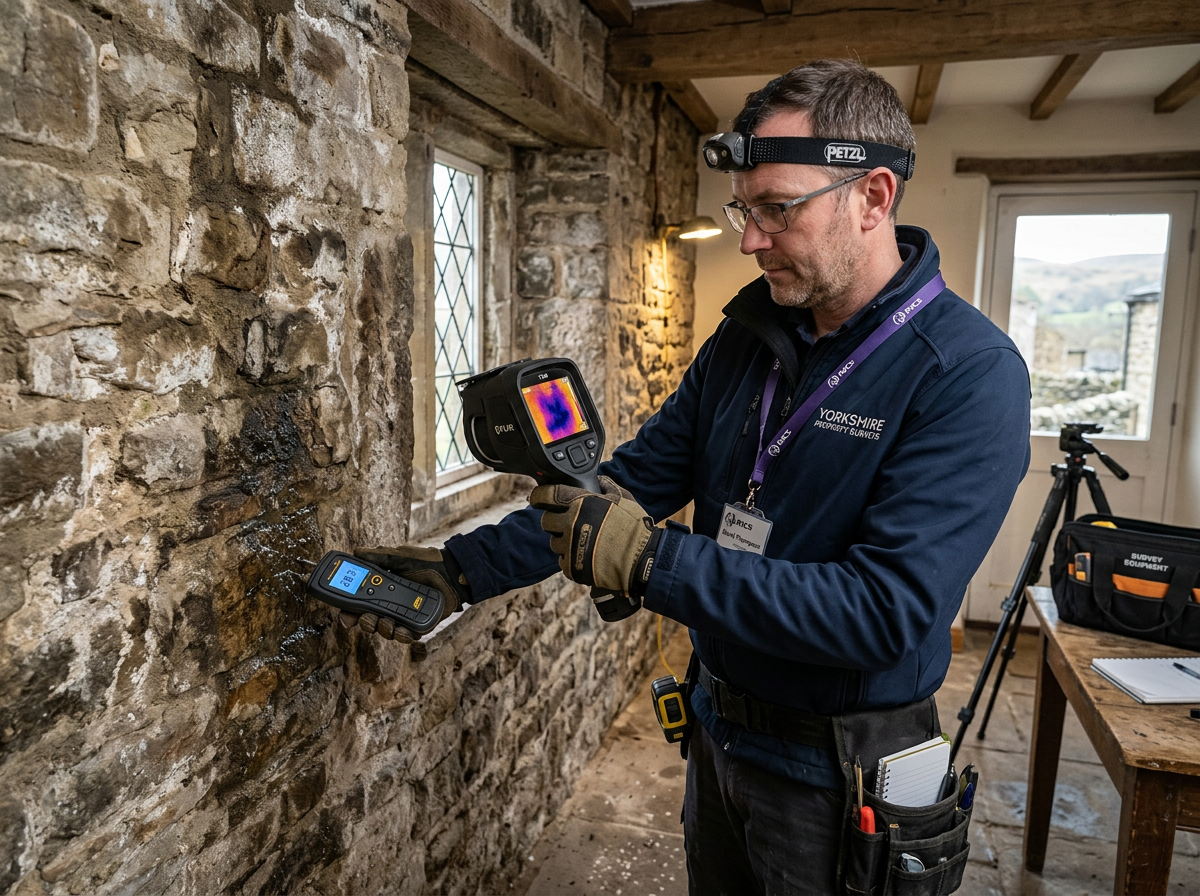
It is important to distinguish genuine rising damp from condensation (which is far more common and far cheaper to remedy). Our surveyors use calibrated digital moisture meters and thermal imaging cameras to accurately diagnose damp — not just flag it as a generic concern.
Surveyor's Tip
If you notice recently replastered lower walls, be suspicious. A common "fix" is to over-plaster and repaint, temporarily concealing damp. Our thermal imaging cameras detect moisture hidden beneath freshly applied plaster.
2. Roof Defects
Most Victorian terraces in York have pitched slate roofs. Original Welsh slate lasts 80–100 years when properly maintained, but many roofs we inspect have been partially or poorly re-roofed at various points, leading to a patchwork of different slate types, incompatible flashings and inadequate valley details. Common issues include:
- Slipped, cracked or missing slates
- Failed lead flashings at chimney stacks and parapet walls
- Inadequate mortar pointing on ridge tiles (known as "bedded" or "dry-ridge" failures)
- Deteriorating timber rafters where leaks have gone undetected
- Blocked or absent valley gutters
Roof repairs range from a few hundred pounds for minor slate replacement to £8,000–£15,000 for a full re-roof. In a terrace, shared chimney stacks can complicate matters further.
3. Chimney Defects
Virtually every Victorian house in York has one or more chimney stacks. These are exposed to weathering from every direction and are often in poor repair. Failed mortar pointing (repointing costs £800–£2,500 depending on access), deteriorating flaunching around pots, and cracked or leaning stacks are all common findings. Where solid-fuel fires have been used historically, we also check for sooting within chimney voids and potential fire-safety concerns.
4. Structural Movement
Victorian terraces sit on relatively shallow strip foundations — by modern standards, these are insufficient in certain ground conditions. York's underlying geology is predominantly glacial clay and alluvial deposits near the rivers, both of which are susceptible to shrinkage and heave. We regularly see diagonal cracking at door and window lintels, stepped cracking in external brickwork, and differential settlement where additions or extensions have been built on shallower foundations.
Not all cracks are serious — but distinguishing historic (stable) movement from progressive (ongoing) movement requires expert judgement. A Level 3 building survey is the only way to properly assess structural movement in an older property.
5. Timber Defects
Original Victorian floorboards are typically tongue-and-groove softwood pine — beautiful, but susceptible to dry rot and wet rot where moisture has penetrated. Sub-floor ventilation is often inadequate by modern standards, creating humid conditions underneath suspended ground floors. Woodworm (furniture beetle) infestation is also commonly found, particularly in roof spaces and under floorboards.
6. Electrical and Plumbing Systems
Victorian houses were obviously built before modern electrical standards. Many still have partial or full original wiring, often with round-pin sockets, rubber-insulated cables or unprotected wiring in roof spaces. Complete rewiring typically costs £3,500–£7,000 depending on property size. Similarly, original lead or iron pipework may remain in older sections of plumbing. While these are not always in our surveyors' direct remit, we flag any visible concerns and recommend specialist inspections.
Which Survey Do You Need for a Victorian House?
For Victorian properties, we always recommend a Level 3 Full Building Survey rather than a Level 2 HomeBuyer Report. Here's why:
- A Level 3 survey includes a full inspection of roof spaces, sub-floor voids, chimney breasts and all accessible structural elements
- It provides detailed descriptions of defects with repair cost guidance — essential for negotiating price reductions
- Our Level 3 surveys include thermal imaging and damp meter readings as standard
- For any property over 80 years old, the RICS recommends a Level 3 survey
A Level 2 HomeBuyer Report is suitable for post-1930s properties in reasonable condition. For a Victorian terrace in York, it simply doesn't provide enough depth. Our Level 3 surveys start from £500 for a standard two-bedroom terrace.
"We booked a Level 3 survey on a Victorian terrace off Bishopthorpe Road. James uncovered roof timbers with active dry rot and failed DPC works that had been painted over. We renegotiated £14,000 off the asking price. The survey cost £595. Best money we ever spent."
— David & Karen Southwell, Bishopthorpe Road, York
What If the Victorian House Is Listed?
A significant number of York's Victorian properties are Grade II listed — particularly those in conservation areas around the city walls, Bootham, Clifton and The Mount. Listed building status adds complexity to any survey and subsequent repair works. You will generally need Listed Building Consent for any changes to internal or external features, and you must use traditional materials — lime mortar, natural slate, traditional joinery — rather than modern alternatives.
York Surveyors has extensive experience surveying listed properties, and our Level 3 surveys for listed buildings include specific commentary on listed building obligations, traditional construction methods and the implications for any planned works.
Using Your Survey to Negotiate
A detailed building survey report is a powerful negotiating tool. Once you receive your Level 3 report, our surveyor will walk you through the key findings on a free 30-minute phone consultation. Based on the repair cost estimates provided, you can:
- Request a price reduction equivalent to the estimated repair costs
- Ask the vendor to carry out specified works before exchange
- Use the report to request a specialist contractor's quote, which may support a larger reduction
- Walk away if the issues are more significant than anticipated
Our clients report average savings of £8,000–£20,000 when using survey findings in price negotiations on Victorian properties.
Frequently Asked Questions
Yes — Victorian houses offer excellent value, character and space. They tend to hold their value well and appeal to a wide range of buyers. The key is to buy with eyes open: commission a Level 3 survey, factor repair costs into your offer, and budget for ongoing maintenance. With the right preparation, a Victorian house in York is a fantastic investment.
Annual maintenance costs vary widely depending on condition. As a rough guide, budget around 1–2% of the property value per year for ongoing maintenance. When buying, a Level 3 survey will identify any immediate significant costs — roof works, damp remediation, structural repairs — so you can plan your budget accordingly.
Victorian houses sit on shallow strip foundations, which makes them susceptible to differential settlement in areas with clay soils. In York, proximity to the rivers and glacial clay deposits can increase this risk. However, most movement in Victorian properties is historic and stable. A Level 3 survey will assess whether any cracking or movement is active or historic and advise accordingly.
Ready to Buy a Victorian House in York?
York Surveyors has been helping York buyers make confident, informed decisions about Victorian properties since 2009. Our Level 3 building surveys are thorough, plain-English and designed to give you a complete picture of the property you're about to buy.
Call us or request a free quote online — we'll get back to you within 2 hours during office hours.

James has carried out over 400 building surveys of Victorian properties in York. He founded York Surveyors in 2009 and remains York's leading expert on period residential property.