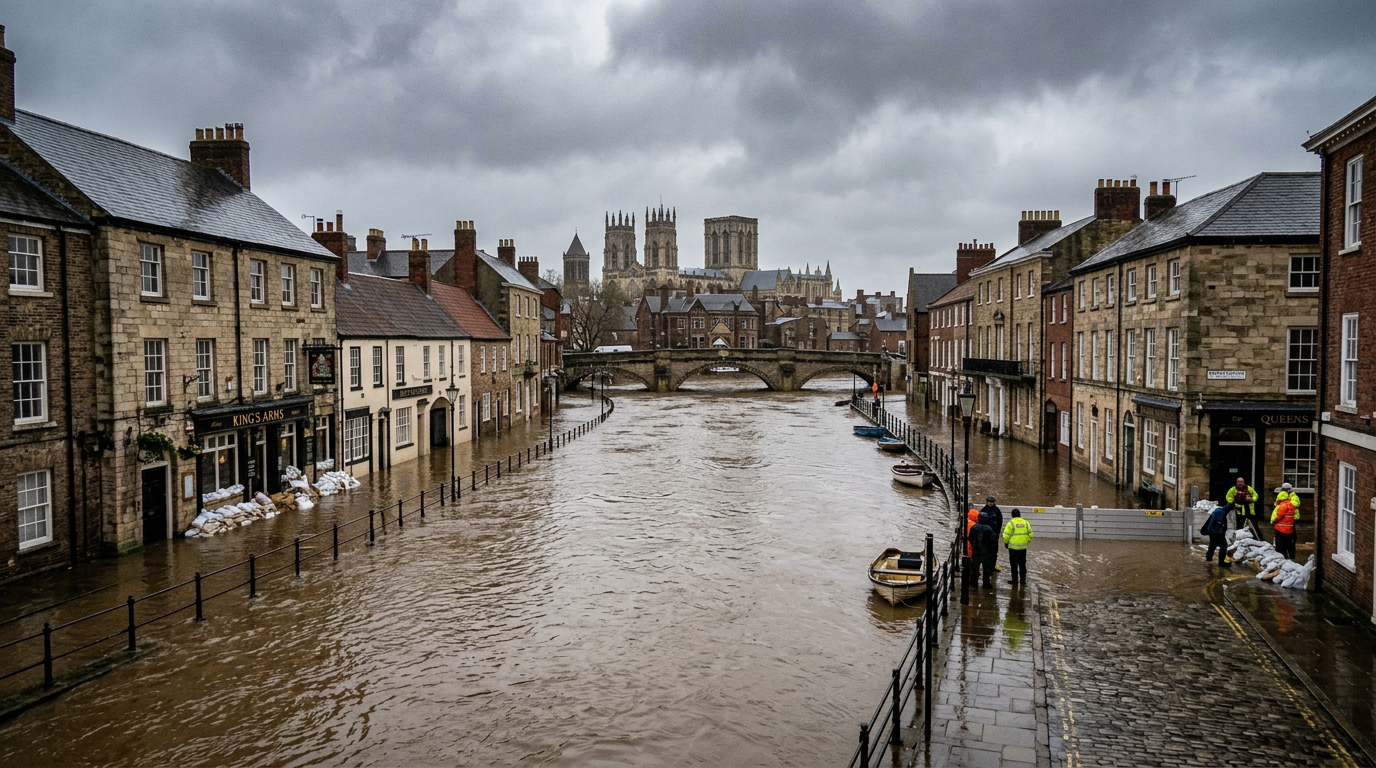
York has one of the most complex and well-documented flood histories of any city in England. The River Ouse runs right through the heart of the city, and the River Foss joins it just south of Clifford's Tower. Both rivers flood regularly — and when they do, the consequences for properties in low-lying areas can be devastating and expensive.
If you're buying a property anywhere near the River Ouse, the River Foss, or in any of York's low-lying central areas, flood risk is not a theoretical concern — it is a practical reality that must be understood before you commit. York Surveyors has produced this frank, straightforward guide to help buyers navigate flood risk in York.
York's Flood History
York has flooded many times throughout its history, but the most severe events in living memory include the flooding of December 2015, when the River Ouse peaked at a record 5.2 metres above normal level — the highest recorded since the 1600s. Hundreds of homes and businesses were flooded. The flooding of November 2000 was also significant, affecting large parts of the city.
Since 2015, the Environment Agency has invested over £45 million in improved flood defences for York, including raised flood walls along the riverside, improved pumping stations, and better flood barrier systems. These defences have improved the city's resilience considerably — but they do not eliminate flood risk entirely, and they do not protect all properties.
Understanding Flood Zones in York
The Environment Agency (EA) divides England into flood zones based on the probability of flooding:
- Flood Zone 1 (Low Risk): Less than a 1-in-1,000 annual probability of flooding. The vast majority of properties fall in this zone.
- Flood Zone 2 (Medium Risk): Between 1-in-100 and 1-in-1,000 annual probability of river flooding, or 1-in-200 to 1-in-1,000 for sea flooding.
- Flood Zone 3 (High Risk): More than 1-in-100 annual probability of river flooding, or 1-in-200 for sea flooding. In York, properties along both riverbanks and in low-lying city centre areas often fall in Flood Zone 3.
You can check the flood zone for any property in England using the free Environment Agency Flood Risk checker. This should be one of your first steps when considering a property near the river in York.
York Areas Most Affected by Flood Risk
The following areas in York have historically experienced flooding or contain properties in Flood Zone 2 or 3:
- Skeldergate and King's Staith — riverside properties south of Ouse Bridge
- Bishopgate Street and Clementhorpe — adjacent to the River Ouse
- Layerthorpe and Foss Islands Road — near the confluence of the River Foss
- Stamford Bridge Road and Derwent areas — River Derwent flood plain
- Rawcliffe and Skelton — flat terrain near the River Ouse north of the city
- Poppleton — flood plain of the Ouse west of York
It is important to note that many properties in these areas are perfectly habitable and have never flooded. Flood zone designation is about statistical probability over many years, not a guarantee of flooding. However, flood zone designation does have significant practical implications for mortgageability, insurance and long-term value.
Flood Risk and Mortgages
Properties in high flood-risk areas can present difficulties for mortgage applicants. Lenders generally require that a property in a high-risk zone has adequate flood insurance in place before they will offer a mortgage. Some lenders will not lend on properties with a history of flooding, or will apply a higher deposit requirement.
If you are considering a property in a flood-risk area, check with your mortgage broker early in the process whether your chosen lender is comfortable with the property's flood zone designation and flood history.
Flood Insurance in York
Standard buildings insurance policies typically cover flood damage, but premiums for properties in flood zones are significantly higher — and some insurers may decline to offer flood cover altogether for properties with a flood history. The government-backed Flood Re scheme exists to help owners of higher-risk homes access affordable flood insurance. Most UK home insurers participate in Flood Re.
Before purchasing a property with flood risk, always:
- Check whether the property has flooded previously (ask the vendor directly — they have a legal obligation to disclose known flooding)
- Ask your solicitor to raise specific flood-related enquiries with the vendor and Local Authority
- Obtain indicative insurance quotes for the property before exchange, not after
- Research the Flood Re scheme if you are concerned about future insurability
Ask the Right Questions
When viewing a property with flood risk in York, ask the vendor: "Has this property ever flooded?" and "What flood resilience measures are in place?" A vendor who is aware of historic flooding must disclose it — non-disclosure can give you grounds to rescind the contract after exchange.
How Flood Risk Affects Property Values in York
Research by RICS and various academic institutions suggests that properties with a history of flooding typically sell for 5–15% less than equivalent unaffected properties. However, the picture is nuanced in York. Well-situated riverside properties — even those in flood zones — often command premium prices because of their views and central locations.
What flood risk does affect is the pool of buyers: properties in Flood Zone 3 cannot be purchased by cash buyers only (many lenders are cautious), which reduces the buyer pool and can slow sale times. Over the longer term, increasing flood risk as a consequence of climate change is an important consideration for any property in a flood-affected area.
What Your Building Survey Should Cover
A York Surveyors Level 2 or Level 3 building survey will note any visible evidence of past flooding within the property, including:
- Tide marks on lower walls (often painted over or replastered)
- Evidence of damaged or replaced floor coverings, joinery or plasterwork at low level
- Warped or delaminated lower kitchen and bathroom units
- Presence of flood resilience measures (airbrick covers, door boards, sump pumps)
- Ground levels and proximity to watercourses
We will also recommend that your solicitor carries out specific flood-related enquiries as part of the conveyancing process, and we will include commentary on the flood zone designation and any recent flood events that may be relevant.
Flood Resilience Measures
If you decide to proceed with a purchase in a flood-risk area of York, there are both resistance and resilience measures that can protect your property:
- Flood barriers at doors and airbricks (relatively low cost, high effectiveness)
- Raised electrical sockets and first-floor consumer units
- Ceramic or concrete ground floors instead of timber suspended floors
- Flood-resilient plasterboard at low level
- Non-return valves on drains to prevent backflow
- Sump pumps in basements or undercroft areas
Many people successfully buy and live in flood-zone properties in York. The key is to go in with your eyes open: understand the flood history, secure appropriate insurance, consider flood resilience measures, and factor the risk into your purchase price. A survey, proper legal enquiries and expert advice will help you make an informed decision.
Ask the vendor directly — they are legally obliged to disclose known flooding. Your solicitor's local authority search will include flood risk information. The Environment Agency's flood checker tool provides zone information. A York Surveyors building survey will also note any physical evidence of past flooding within the property.
Most lenders will lend on properties in Flood Zone 2 or 3 provided flood insurance is available and affordable. However, some lenders are more cautious, particularly for properties with a flood history. Speak to a whole-of-market mortgage broker early in the process to understand which lenders are comfortable with your specific property's situation.
Get Expert Advice Before You Buy
York Surveyors has deep local knowledge of York's flood risk areas and provides Level 2 and Level 3 building surveys that specifically address flood-related concerns. If you're considering a property near the river in York, let us help you make a fully informed decision.

James has carried out building surveys on dozens of flood-affected properties across York since 2009 and has first-hand knowledge of York's riverine areas and flood history.