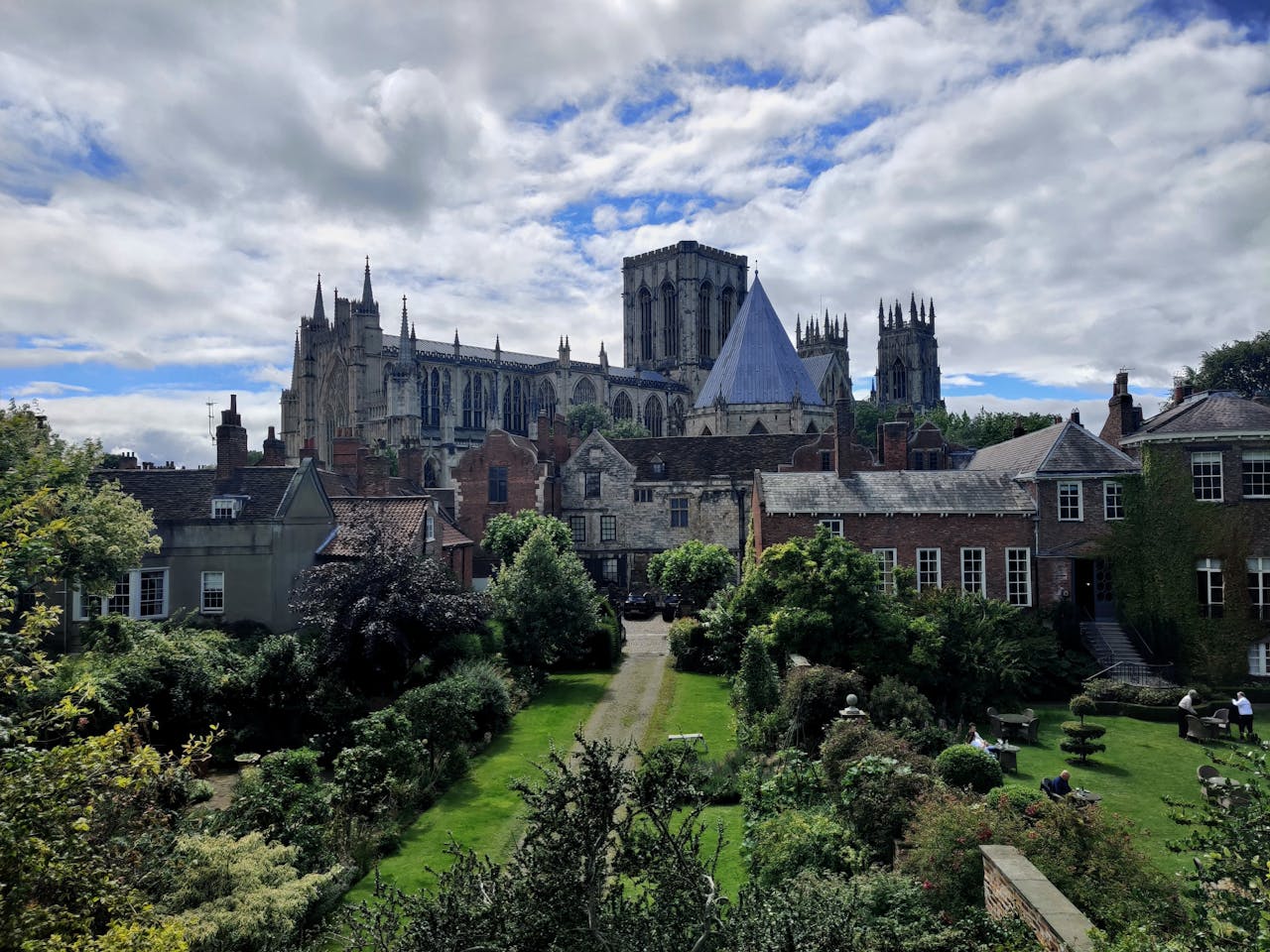
York's property market has consistently outperformed the national average over the past decade, and 2026 looks set to be no different. As local RICS-accredited surveyors, we have a front-row seat to the realities of York's property market — not just the headline figures, but the granular detail of which streets are in demand, which property types are flying off the market, and where the hidden risks lie.
This article is our independent analysis — with no estate agent spin. Our only interest is giving you an honest, accurate picture so you can make better decisions.
York's Property Market: The 2025 Overview
York remains one of the most sought-after cities in the north of England. Its combination of exceptional transport links (London in under two hours on the East Coast Mainline), world-class heritage, strong employment base and outstanding schools keeps demand consistently high relative to supply.
Average house prices in York in early 2025 sit at approximately £310,000–£330,000 across all property types — significantly above the national average for northern England. However, averages mask enormous variation within the city.
Average House Prices by York Area (2025 estimate)
What's Driving Demand in York's Property Market
Several factors are keeping demand robust in York's property market in 2025:
- Rail connectivity: York's position on the East Coast Main Line means many buyers are London-based professionals who can realistically hybrid-work from York, bringing London purchasing power to a Yorkshire market.
- University and healthcare: The University of York and York St John University, combined with York and Scarborough Teaching Hospitals NHS Foundation Trust, provide a large and stable employment base.
- Tourism and culture: York's status as a major tourist destination creates year-round economic activity and keeps the city buoyant in ways that many comparable northern cities are not.
- Limited supply: York's green belt, city walls and conservation area constraints significantly limit new development, putting consistent upward pressure on prices.
York Property Hotspots in 2025
Based on the instructions we receive and what we observe on the ground, these are the areas generating the most buyer interest in 2025:
| Area | Property Type | Average Price Range |
|---|---|---|
| Bishopthorpe Road Corridor | Victorian terraces with gardens | £280,000 – £450,000 |
| Fulford & Fishergate | Period and post-war mix | £250,000 – £400,000 |
| Haxby & Skelton | 1970s–2000s detached/semi | £220,000 – £380,000 |
| City Centre & Historic Core | Period apartments & cottages | £200,000 – £600,000+ |
What This Means for Buyers: The Survey Angle
In a competitive market, buyers sometimes feel pressure to skip or downgrade a survey to speed up a transaction. This is almost always a mistake.
The properties that are selling quickly in York are often the Victorian and Edwardian terraces that — by definition — need the most thorough inspection. A Level 3 Building Survey on a period property near the city walls is not an optional luxury: it is essential due diligence on what is likely to be the largest purchase of your life.
💡 Market Tip
In a competitive market, having your survey booked and your surveyor identified before you make an offer can give you a genuine advantage. It signals to the vendor that you're serious, organised and capable of moving quickly — which can be just as persuasive as a higher offer price.
Advice for Sellers in York's 2025 Market
If you're selling property in York, the market conditions are generally favourable. Here are things you can do to maximise your sale price:
- Commission a pre-sale survey: Having an independent defect analysis report before you go to market allows you to address any issues before they become a problem in a buyer's survey — or at least to price the property accurately.
- Address obvious maintenance issues: Fixing cracked pointing, clearing blocked gutters and repairing obvious defects before listing can have a disproportionate positive impact on perceived property condition.
- Be transparent: Under the new Material Information rules, sellers and agents have an obligation to disclose known issues. Being upfront about any known defects builds trust with buyers and reduces the likelihood of a post-survey price renegotiation.
The Wider North Yorkshire Market
Beyond York itself, the North Yorkshire property market is highly varied. Harrogate continues to be the most expensive market town in the region. Selby has seen above-average growth as buyers priced out of York seek accessible alternatives with good rail links. Rural North Yorkshire — the Howardian Hills, the Vale of Pickering, the Dales fringe — remains attractive for those seeking space and character at lower prices, though rural properties carry their own survey challenges.
York Average House Price Trend (2019–2025)
FAQ: York Property Market
As independent surveyors rather than estate agents, we're well placed to give you an honest answer: York's property market has historically been resilient, and the structural factors driving demand — limited supply, excellent rail links, strong employment — aren't going away. Whether it's the "right time" to buy depends on your personal circumstances more than market timing. What we'd always say is: if you're buying in York, make sure you have a thorough survey.
Areas offering relatively good value in 2025 include Tang Hall, Acomb, Rawcliffe and Huntington — all within easy reach of the city centre but with lower average prices than the more fashionable inner suburbs. For buyers willing to look beyond the city boundary, Selby, Tadcaster and Pocklington all offer substantially lower prices with good York rail links.
Properties in high flood-risk areas (Flood Zone 3 near the River Ouse and River Foss) can be significantly harder to insure, mortgage and resell. The impact on value varies: some buyers accept the risk in exchange for a lower price and a desirable location; others avoid flood-risk properties entirely. We always address flood risk explicitly in our survey reports for relevant properties.

James is the founder of York Surveyors and has been surveying property in York and North Yorkshire for over 15 years. He has an unmatched knowledge of York's local property market and its unique characteristics.